Understanding Geometry in Theory
Geometry, as a mathematical discipline, fundamentally focuses on the properties and relations of points, lines, surfaces, and solids. In textbooks, students typically learn about geometric concepts such as angles, areas, and the Pythagorean theorem. While these concepts provide a solid theoretical foundation, they may at times feel abstract or detached from real-world applications.
The Application of Geometry in Design Workshops
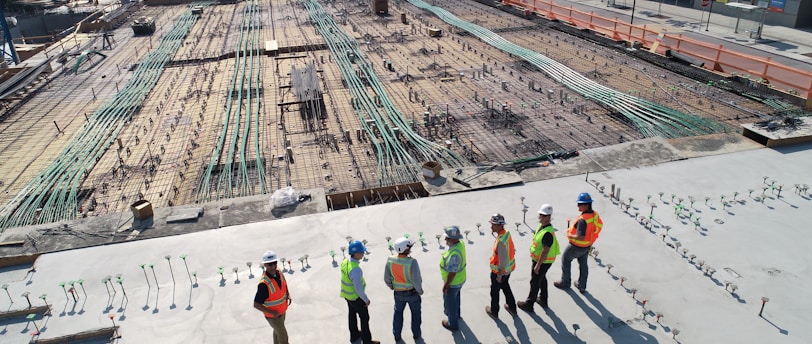
The shift from textbook learning to practical application comes vividly into play in environments like construction and design workshops. For instance, when architecture students use geometric principles in drafting building designs, these concepts come to life. A triangle, learned in theory as a simple shape defined by three points, reveals its stability and significance when applied to constructing a truss system in roofing. In such practical settings, students appreciate the strength that geometry brings to structure, which is only briefly touched upon in textbooks.
Real-World Examples of Geometry in Action
Another excellent example of the transition from theory to practice can be observed in carpentry, where the application of geometric concepts is paramount. A carpenter utilizing right angles ensures that walls are built square, thereby preventing structural issues in the future. For instance, when cutting materials, a simple understanding of the angles and measurements involved can drastically change the outcome of a project. Furthermore, the application of geometric principles in creating circular structures, such as domes or arches, showcases how students can visualize and execute complex designs that stem from foundational geometric theories.
Furthermore, programs aimed at bridging the theory-practice gap often feature hands-on workshops where participants engage in projects requiring geometric calculations. Such experiences enable a deeper understanding of spatial reasoning and the importance of accurate measurements. Similarly, through the use of advanced software that simulates physical spaces, students witness the immediate consequences of their geometric decisions, reinforcing the invaluable connection between their academic learning and professional application.
In conclusion, transitioning from the theoretical aspects of geometry found in textbooks to real-world applications in construction and design fosters a profound understanding of the subject. The engagement in practical workshops makes geometric concepts tangible and relevant, exemplifying how essential these mathematical principles are in various vocational paths. Ultimately, as students bridge this theory-practice gap, they emerge from their educational experience not only with knowledge but also with the confidence to apply it effectively in their future careers.